
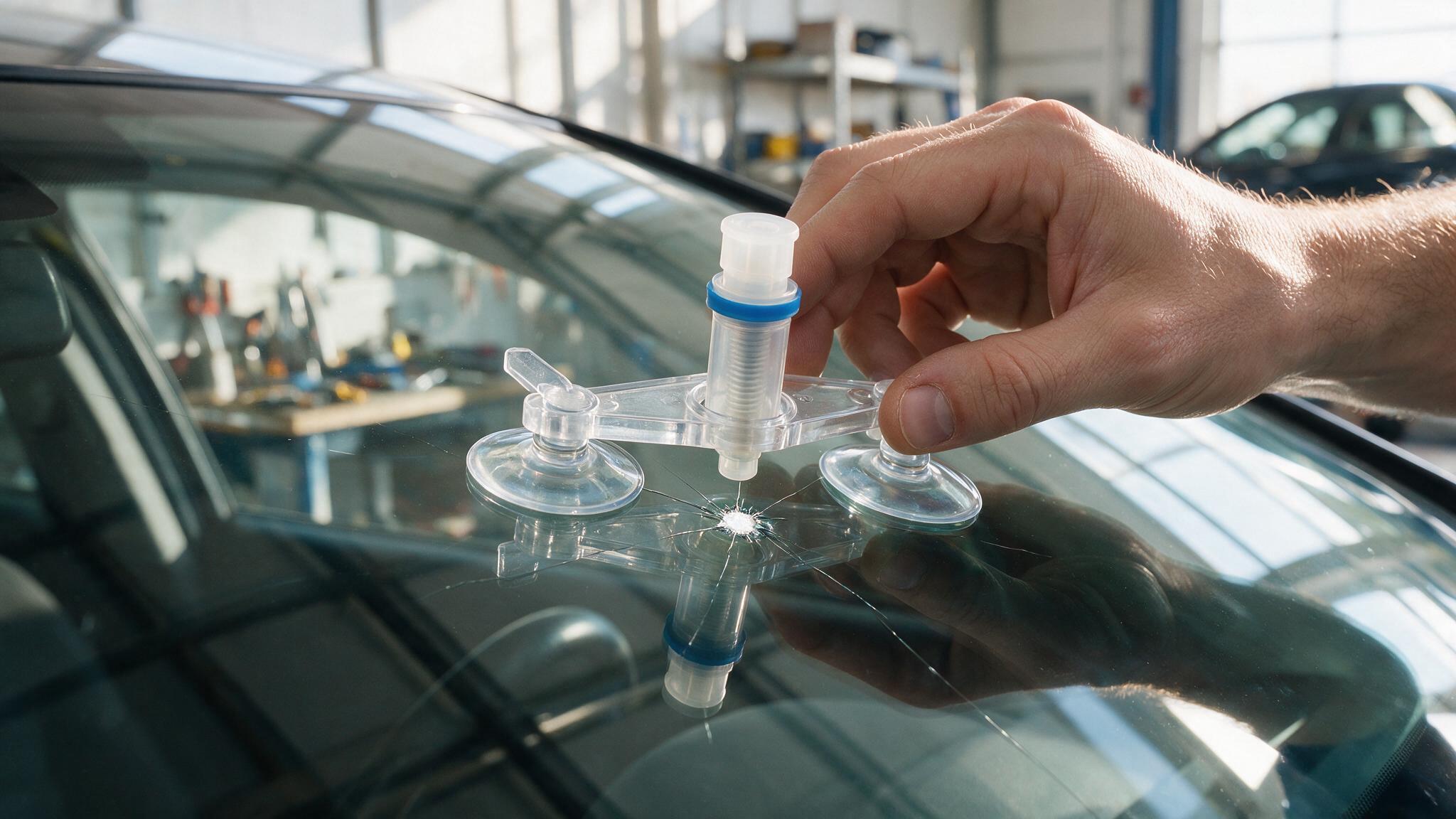
From the waiting room it looks like a small machine suction-cupped to your windshield and twenty quiet minutes. Here is what is actually happening on the other side of the glass, and why a proper repair stops a chip for good.
The five steps of a resin repair
1. Inspection
Size, type, depth and location get checked first. This is where we confirm a repair will hold, following the same rules as our chip vs crack guide.
2. Cleaning
Loose glass dust and moisture are removed from the impact point. A dry, clean break takes resin far better, which is why fresh chips repair best.
3. Vacuum and inject
The injector seals over the chip, pulls a vacuum to extract trapped air, then pushes resin into every leg of the break under pressure.
4. UV cure
An ultraviolet lamp hardens the resin in minutes, bonding the layers so the break can no longer travel.
5. Polish and check
Excess resin is scraped and polished flush, then the optics are checked from the driver’s seat.
What a repair can and cannot do
A successful repair restores the windshield’s structural integrity at the damage point and stops the crack from spreading. What it does not promise is invisibility: most repairs leave a small cosmetic trace, like a faint water drop, which is normal and does not affect safety. If the damage sits directly in the driver’s sight line, replacement is often the wiser call for optical reasons, a judgment call CAA-Québec’s windshield guide describes the same way we practice it.
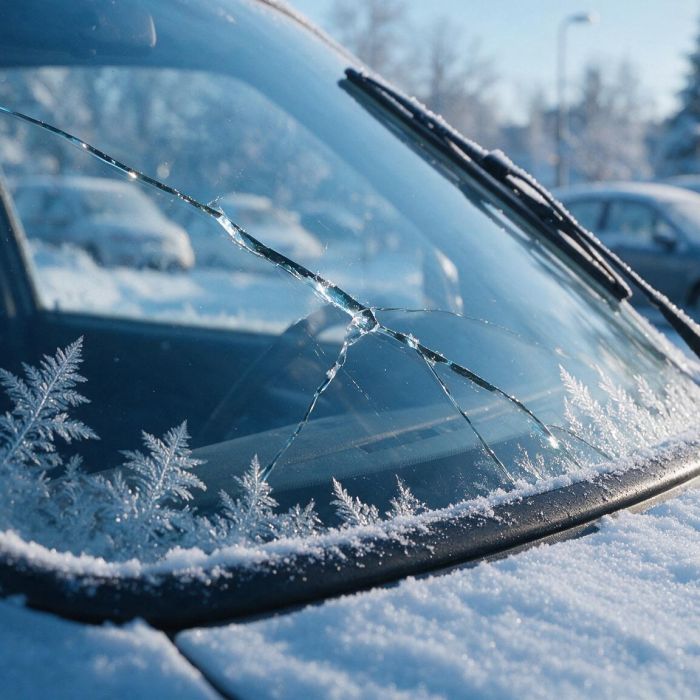
Keep the chip dry and clean: a piece of clear tape over it blocks water and dirt without interfering with the repair. Avoid the car wash and go easy on the defroster, since heat and pressure are what make chips run, especially in fall, as we showed in why chips spread faster in cold weather.
Under an hour, and cheaper than the alternative
A single chip repair through our windshield repair service typically fits inside a lunch break, no adhesive cure time, no camera recalibration, and it costs a fraction of a replacement. The only bad version of this story is the one where the chip waited too long.
Got a chip? Make it boring.
Send a photo with a coin for scale, and if it is repairable, we will book you for a quick resin fix.
This article is general information, not legal or insurance advice. Coverage varies by policy and vehicle, so confirm with your insurer or ask us for an exact quote.