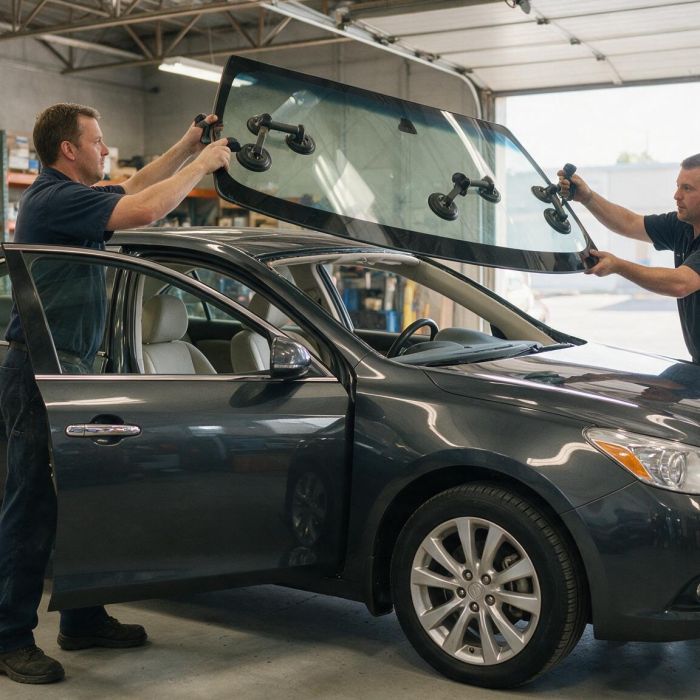


Your lane keeping, automatic braking and adaptive cruise all depend on a camera that watches the road through your windshield. Move that glass by even a few millimetres during a replacement, and the camera’s idea of straight ahead no longer matches reality. Recalibration is how it relearns the truth, and there are two ways to do it.
Why the camera cares about your windshield
The forward camera sits in a bracket bonded to the glass, usually behind the mirror. It measures lane lines, vehicles and distances in fractions of a degree. A new windshield means a new bracket position, new glass thickness and new optical properties, so the system has to be told exactly where it now points. Transport Canada’s overview of driver assistance technologies is clear that these systems assist rather than replace the driver, and they can only assist well when their sensors are aligned.
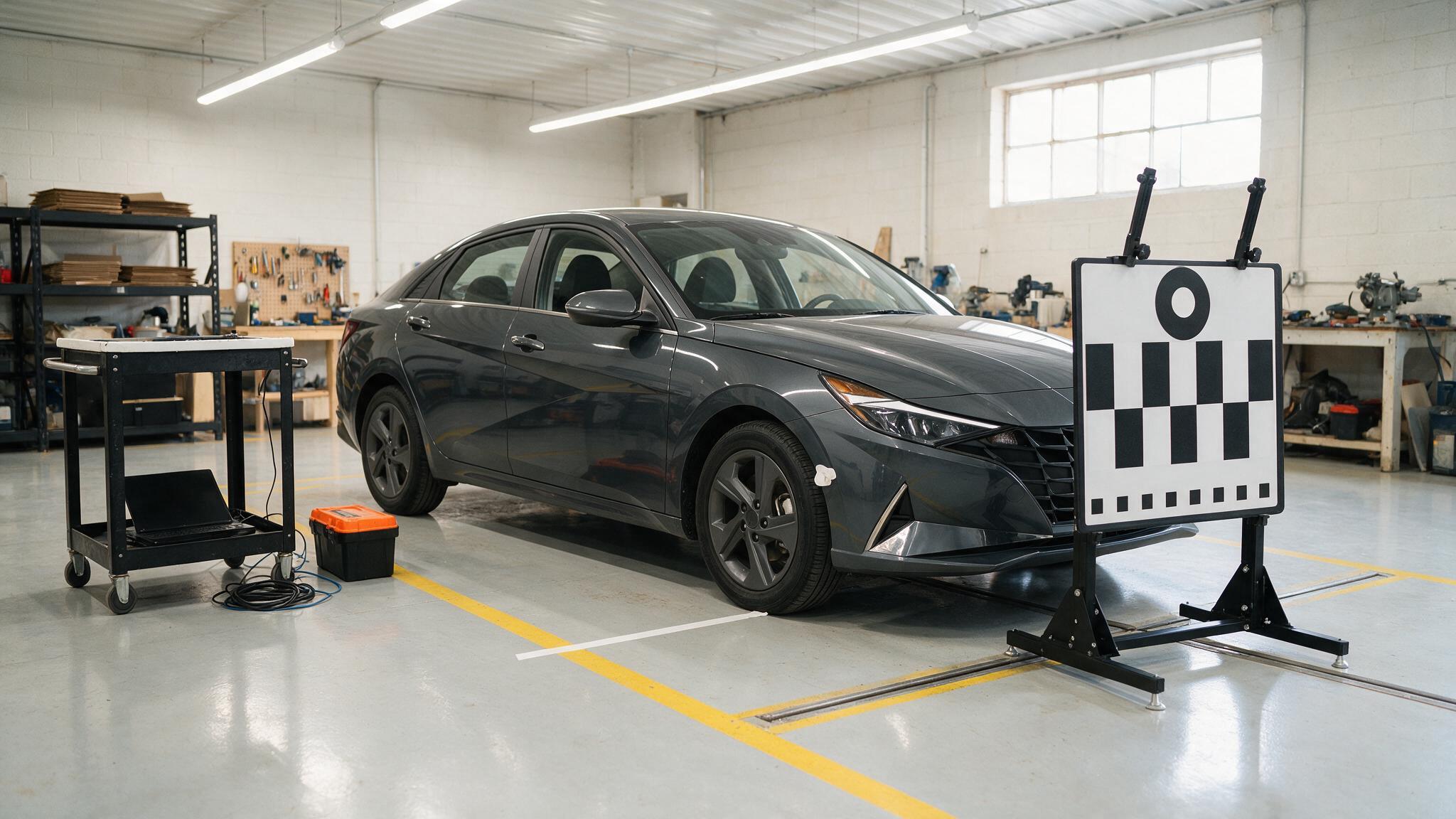
Static vs dynamic, side by side
Static calibration
- Done in the shop, engine running, car perfectly level
- Printed targets placed at measured distances and heights
- Needs controlled lighting and floor space
- Common on many Asian and European brands
Dynamic calibration
- Done on the road with a scan tool connected
- Requires steady speeds, clear lane markings, decent weather
- The system learns from real traffic geometry
- Some vehicles need it after the static procedure
What happens if you skip it
The car often will not warn you. The camera still sees, it just sees wrong: a lane keep assist that hugs one side, emergency braking that reacts late or brakes for nothing, adaptive cruise that misjudges distance. On some models the dashboard throws a fault, on many others the errors stay silent. That is why recalibration is not an upsell after a glass job, it is the last step of the job itself, as we covered in why your new windshield needs ADAS calibration.
Recalibration is also recommended after some suspension work, alignment changes, or a camera unplugged during other repairs, not only after glass replacement. If a warning light involving lane or braking systems appears after any work on the car, mention it when you book.
How we handle it
Our ADAS calibration service follows the procedure your manufacturer specifies: static targets, a dynamic road procedure, or both, with a calibration report at the end. If we replace your windshield, the calibration is planned into the same visit so you leave with the systems verified, not with homework.
New windshield, or a camera acting strange?
Tell us your vehicle and what was done to it, and we will tell you which calibration it needs.
This article is general information, not legal or insurance advice. Coverage varies by policy and vehicle, so confirm with your insurer or ask us for an exact quote.